


Visitation areas
The Fiocruz Museum of Life is made up of several exhibition areas and a large green zone. Let’s get to know them!
Welcome Center
Upon arriving at the Fiocruz Museum of Life, visitors are met with a campus rich in natural beauty! Its Welcome Center or Train Station – as it resembles a train station – is the first place where the public is welcomed, receiving orientation and information about the tour. Grab your tag and enjoy your visit!
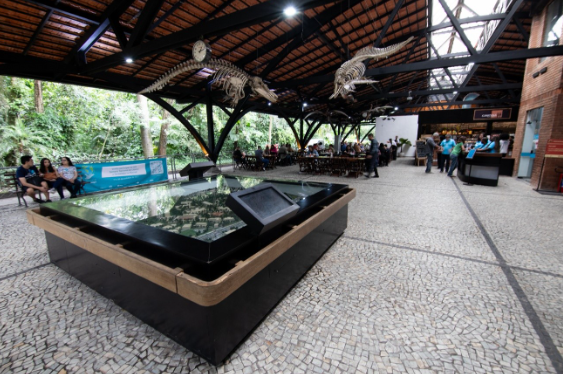
Credits: Vitor Vogel
Upon arriving at the Fiocruz Museum of Life, visitors are welcomed at the Train Station, a space that brings nature and knowledge together. Just grab your tag and start your visit.
Mourisco Castle
The Mourisco Castle, a Neo-Moorish style castle and Fiocruz’s most iconic building, began construction in 1905 and was completed in 1918. Visitors are invited to take a trip back to Rio de Janeiro in the early 20th century, when public health and the city were undergoing significant transformations. Exhibitions and storytelling sessions are among the activities held in this area.
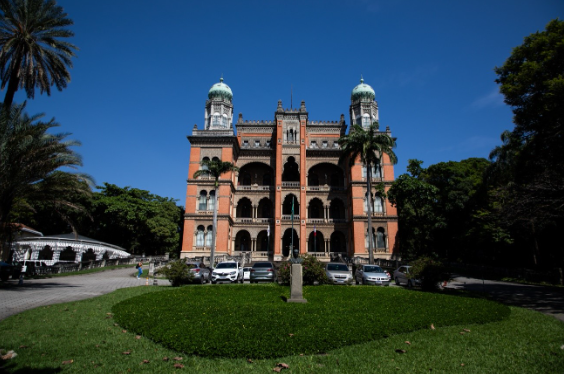
Credits: Vitor Vogel
The Mourisco Castle, a Fiocruz icon, invites visitors to take a journey through time.
Butterfly House
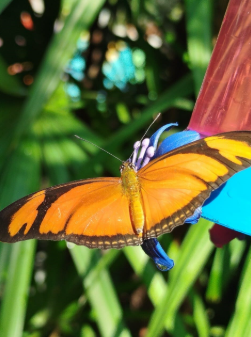 The only one in Rio de Janeiro! At our Butterfly House, discover three species of butterflies: the great orange tip (Anteos menippe), the great southern white (Ascia monuste) and the Julia heliconian (Dryas iulia).
We are certain that it will be an excellent opportunity for you to learn more about their feeding and reproductive habits, as well as to chat about ecology and environmental preservation!
Virginia Schall Science Tent
In this space, our theatrical productions come to life with a lot of science and art! The Virgínia Schall Science Tent is a venue for shows and events. The theatrical tradition of the Fiocruz Museum of Life began even before the Museum’s official opening in 1999. In other words, it’s a long-standing love story!

Credits: Vitor Vogel
The Virgínia Schall Science Tent combines science and art, featuring shows and events since before the official opening of the Fiocruz Museum of Life.
Science Train
One of the most beloved attractions at the Fiocruz Museum of Life, the Science Train was recently reopened with a newer, more sustainable, and even more special electric model! Equipped with a glass roof, it offers visitors a unique and interactive experience, traveling through the historic campus.
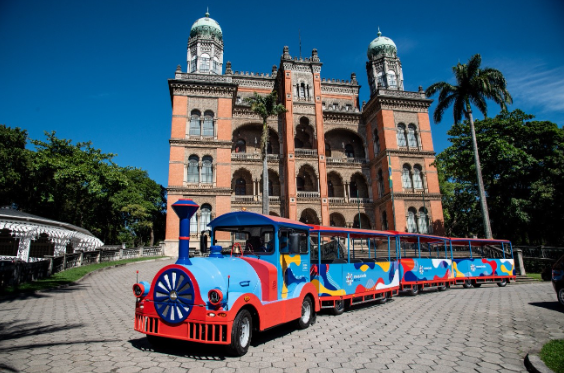
Credits: Vitor Vogel
The Science Train, reopened with an electric and sustainable model, provides visitors with a privileged and interactive view of the historic Fiocruz Museum of Life campus.
Science Park
A green, open-air area with devices that depict natural phenomena. Visitors can climb a giant cell that is actually a slide, watch waves form while riding a bike, understand how the human auditory system works, or even lie down on the lawn and read a book!
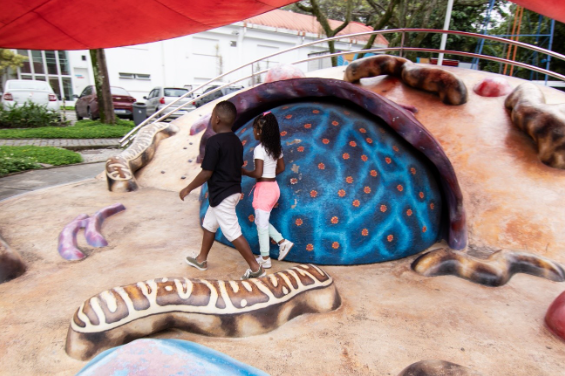
Credits: Vitor Vogel
The Science Park offers an outdoor experience, with interactive activities that aim to teach visitors about nature and how the human body works, in addition to being a great place to relax and wind down.
Pyramid
It is the covered part of the Science Park, with microscopes, games, a camera obscura (which explains how the human eye works) and anatomical models of the human body. Visitors will also be able to take a picture with great scientists on a panel that depicts Albert Einstein’s visit to Fiocruz in 1925, when he was welcomed by Carlos Chagas and other illustrious Brazilian researchers. People love taking selfies here!
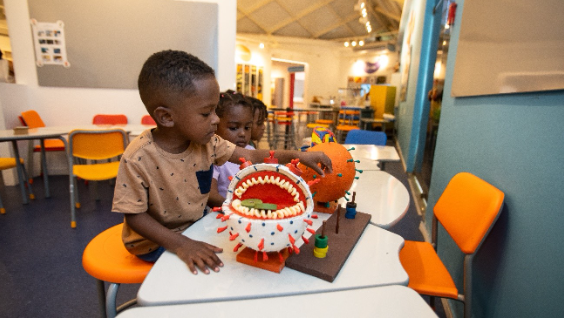
Credits: Gabriela Andrade
The Pyramid is the covered part of the Science Park, where visitors can have fun with microscopes, interactive games and anatomical models.
Stable
Built between 1904 and 1905, the Stable is one of the historic buildings that make up the Manguinhos Historic Architectural Complex (NAHM). In the past, it housed horses used to produce serums against the bubonic plague. It currently hosts the ‘Life and Health: (In)visible Relations” exhibition, which presents the concept of health in its different scales, from microscopy to health as a social phenomenon.
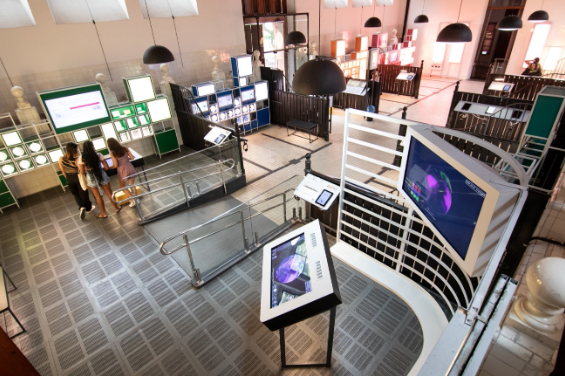
Credits: Vitor Vogel
The Stable, an important historical heritage of Manguinhos, is currently hosting the ‘Life and Health: (In)visible Relations” exhibition.
Clock Building (coming soon)
Another building that is part of the Manguinhos Historical Architectural Complex (NAHM), the first to be completed, in 1904. Inspired by English railway buildings, it housed activities related to the plague bacillus, such as the preparation of serums and vaccines. Nowadays, it’s a space to host exhibitions, with exciting news coming soon!
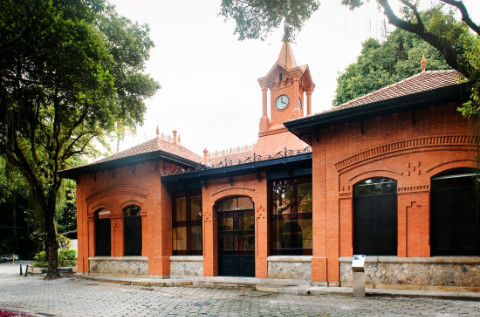
Credits: Heitor Vilela
The Clock Building, the first to be completed in Manguinhos back in 1904, is now an exhibition space that preserves the history of the fight against the plague, with exciting news coming soon!
Dovecote (coming soon)
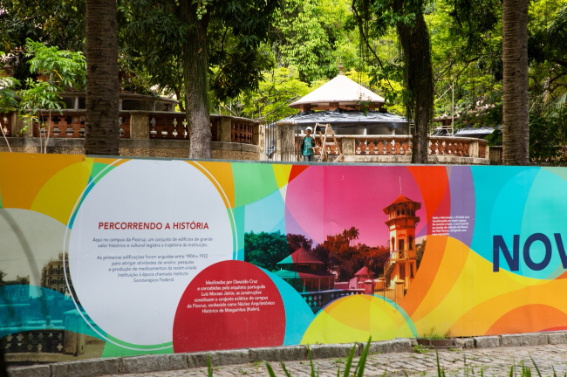
Another building making up the Manguinhos Historical Architectural Complex (NAHM), it was designed to house the vivarium for small animals used in research initiatives at the Federal Serum Therapy Institute, Fiocruz’s former name. The plan is for it to soon become a space for socializing and leisure, offering educational and cultural activities for visitors. Soon, the Dovecote will host a new interactive exhibition.
Credits: Vitor Vogel
Designed to house research animals, the Dovecote will soon be turned into a space for leisurely and cultural activities.


